


English (UK)Français (FR)

Tel : +33 (0)4 77 49 75 80

 baseline


                                                     linkedin       youtube

Ludovic 2025


In 2025 & 2026, the Ludovic software, dedicated to corotating twin screw extrusion, proposes two new versions, with a unique content.


SUMMER 2025 - a v7.2.5 version, with new results for degassing/devolatilization

WINTER 2026 - a v8.0 beta version, ready to host a unique OPTIMIZER module

Those new versions are aimed at strenghtening the Ludovic software capabilities and also enlarging the field of applications, while opening new topics, especially for the recycling (devolatilization is indeed a key point for such products)

.

Summer 2025 - for new results about degassing/devolatilization capabilities

The previous versions of the Ludovic software already held a specific option for computing the devolatilization. Since the version 7.2, Ludovic is able to compute the solute concentration evolution due to the degassing. The solute concentration and the effect of degassing zone are indeed especially interesting for formulations integrating a high ratio of recycled materials. The ability of a screw configuration for removing the undesired particles/impurities in the blend is thus effectively seeked. Ludovic will thus help.

Targetting recycling applications

The Ludovic v7.2.5 helps with such new results in identifiyng the most efficient screw configurations for optimizing the degassing/devolatilization effect.Among the new results:

  • Degassing length -axial length and unrolled chanel length
  • Melt surface exposed at the degassing
  • Residence time under vacuum
  • screw and barrel surfaces

Results are provided as global results for an absolute analysis of a single configuration. They can also be post process in the comparison mode for offering an efficient comparative analysis, especially useful during the stage of screw design elaboration.
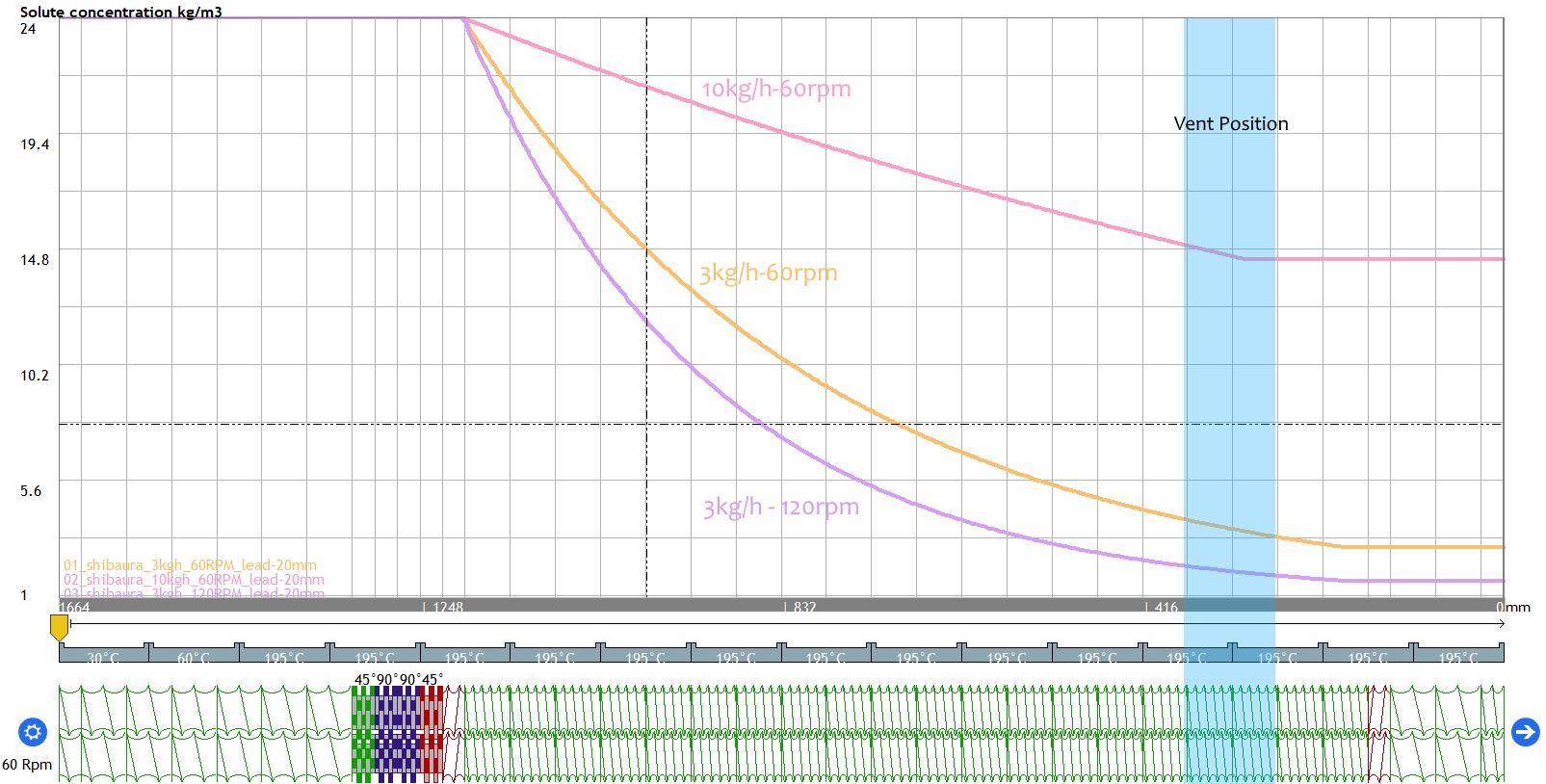

Evolution of the solute concentration according to the venting zone position : comparison of different operating conditions


Some examples

Here are presented two relevant results : Residence Time under vacuum and degassing surface. The first one consider the geometry and operating conditions association whereas the second one is 100% dependant from the screw geometry.
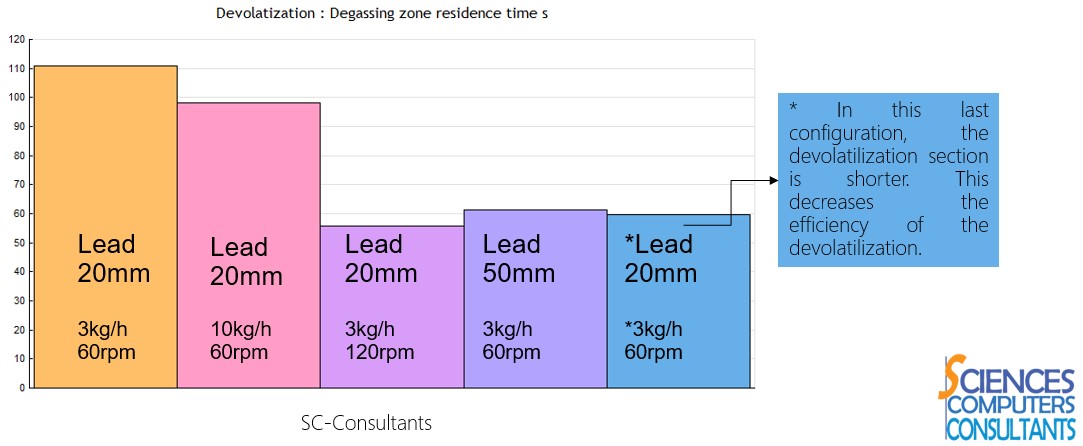
Evolution of the Residence time under vacuum according to different screw designs/process conditions

Increasing the residence time under vacuum helps in optimizing the devolatilization/degassing process.High volume of material in the screw (with configuration with high flow rate/low screw speed) help in increasing this residence time.

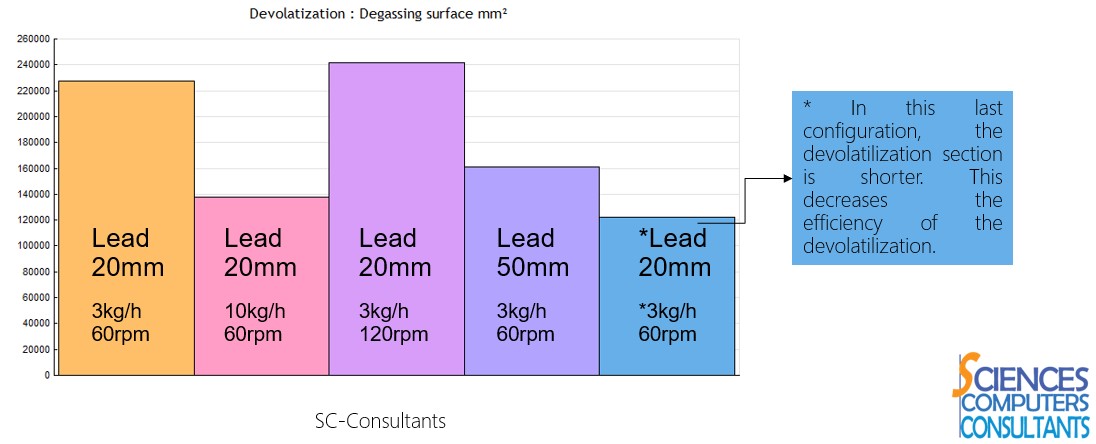
Evolution of the Degassing Surface according to different screw designs/process conditions

Increasing the degassing surface helps in optimizing the devolatilization/degassing process.High volume of material in the screw (with configuration with high flow rate/low screw speed) help in increasing this residence time.

WINTER 2026 - the V8.0 version

From February 2026, the Ludovic v8.0 will be released. Including new results (like the stress distribution, the cumulated free volume...), the Ludovic v8.0 will be ready to host the new AI-GEN TSE module.

The AI-GEN TSE is a brand new module based on an advanced model of genetic algorithms and AI. It is aimed at providing an optimized set of screw profile/operating conditions for a given material.

The screw design is indeed a very sensitive point for developping an industrial process, that is the reason why our teams put lots of efforts to achieve an ambitious feature, able to elaborate a smart screw profile. Now, with Ludovic, this stage can be automatically perform, in order to achieve a screw design. Then, the according functioning domain is screened to identify the best set of process conditions.

How does it work

The user defines his own targets and constraints. Degrees of freedom of the AI are also set here (stage 2).

Targets and constraints can be:

  • material characteristics (like a maximum temperature, as an example)
  • extruder limits (like the maximum torque, as an example)
  • users targets (optimizing the residence time, increasing the SME, as an example)

Ludovic run then the thousand of computations, with a model based on AI and genetic algorithms.

The Optimizer results

The results are then :
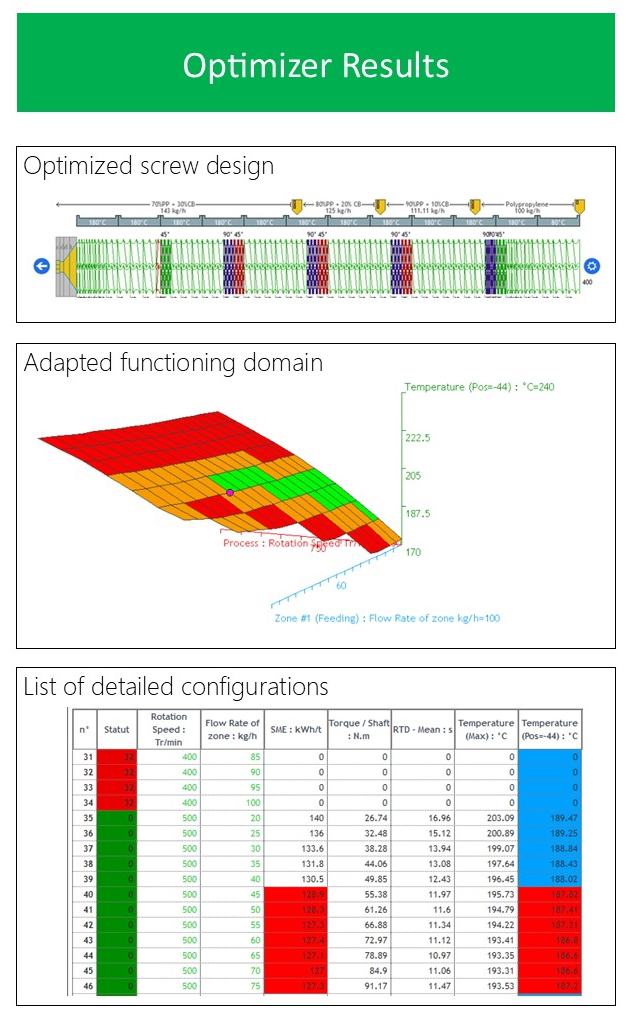
  • 3 optimum screw designs
  • the appropriated functioning domain for each design
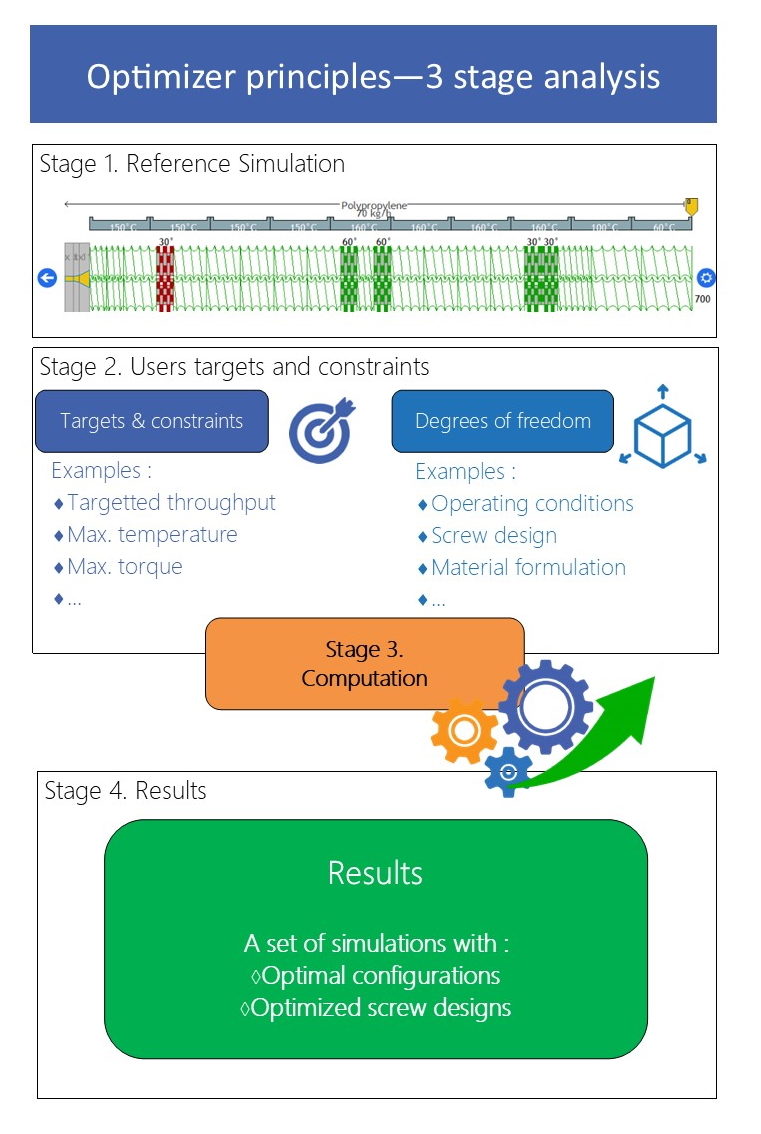
Principle of the Optimizer computation

Results proposed by the Optimizer : improved screw profile with its adapted functioning domain (according to user's criteria


Ludovic : the virtual extrusion lab

Ludovic is today a real solution for developping and optimizing your projects. It offers a cost-effective solution for replacing the expansive trials. Ludovic is available as on premise license (different suited packages are proposed) and consulting services.

Maintenance and updates

Both Ludovic versions are released to users with an up-to-date maintenance contract.

For new users/licenses, feel free to contact SCC to design your Ludovic package.

Visit our websites for more details about it at
https://www.scconsultants.com

Controlling the thermo-metallurgical properties of the alloy during the ingot casting

The Solid software performs an indeep analysis of the solidification process. In this application case, the Solid software focuses on the ingot casting.


Controlling the thermo-metallurgical characteristics of steel ingot is a challenge as they determine the properties of the final workpiece.

Indeed, during the solidification process, many parameters (such as mould geometry, process conditions, alloy composition…) have a strong impact on those characteristics. The competition between the growth of columnar and the sedimentation of the equiaxed grains defines the solidification structures of the ingot. And the solidification structures in turn affect the macrosegregation of alloying elements.

One of the features of the Solid software is computing the sedimentation of equiaxed grains, to predict the thermo-metallurgical properties of the final ingot. Such simulations thus help in optimizing the final product .

Impact of process conditions on the alloys

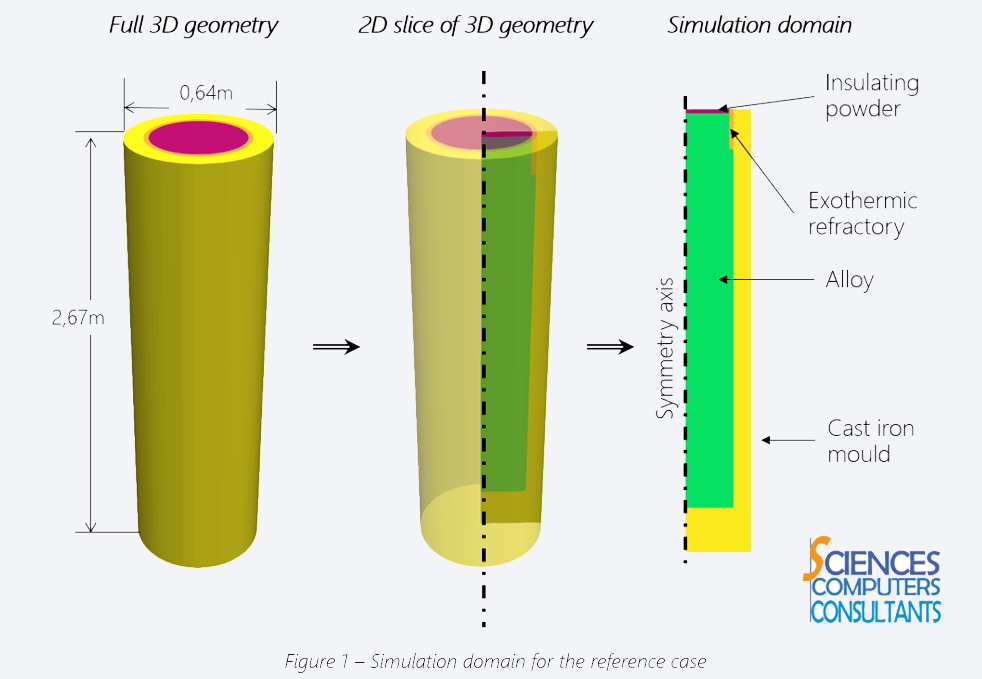
This case is a 2D simulation of the solidification of a cylindrical 6.2 tonnes steel ingot. The cast steel is a ternary Fe-C-Si alloy, with 1.01wt.% carbon content.

This application is used to showcase the solidification models used in the SOLID software: the nucleation and growth of grains, the formation of the solidification structures, and their influence on segregation of the alloying element (carbon). In addition, the model takes into account the impact of filling and process conditions such as the hot top.

Changing parameters such as the filling rate or removing the exothermic properties of the hot top refractory affect the solidification and therefore the final macrosegregation. In this way, the Solid software shows the impact of process parameters on segregation and allows the user to easily test and compare different configurations.

Among the tested configurations:

  • Removing the exothermic properties of the hot top leads to more intensity of positive segregation
  • Reducing the filling rate by half has different effects, like increasing the grain density and reducing the size of negative segregation zone
  • Comparisons of the different configurations a detailed in the following pages

Some results

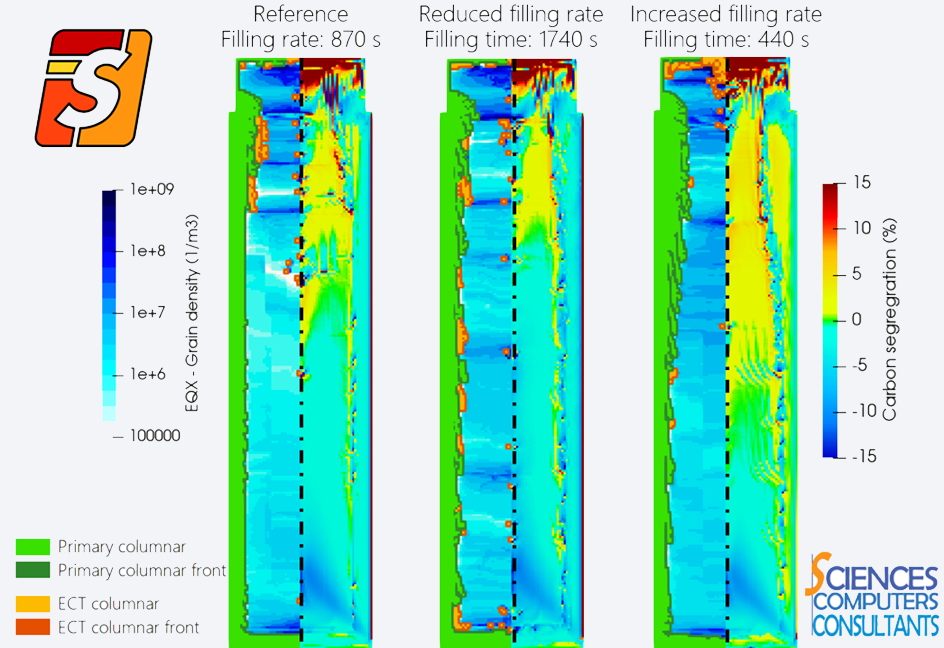
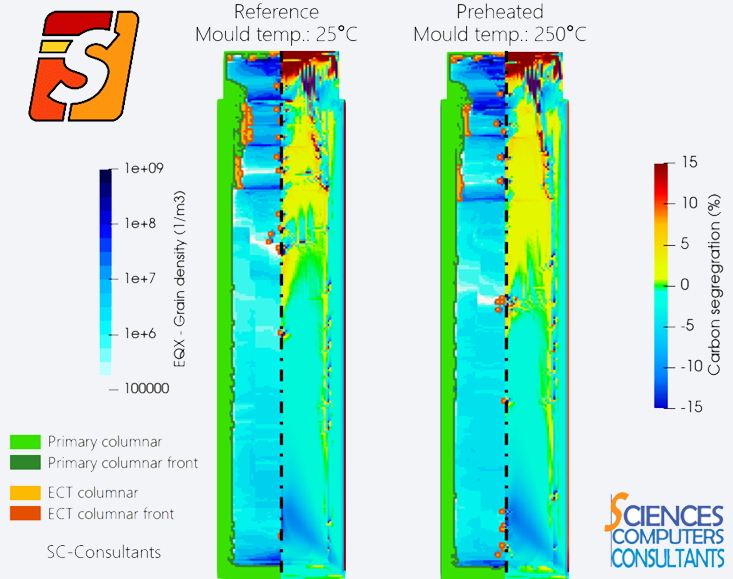
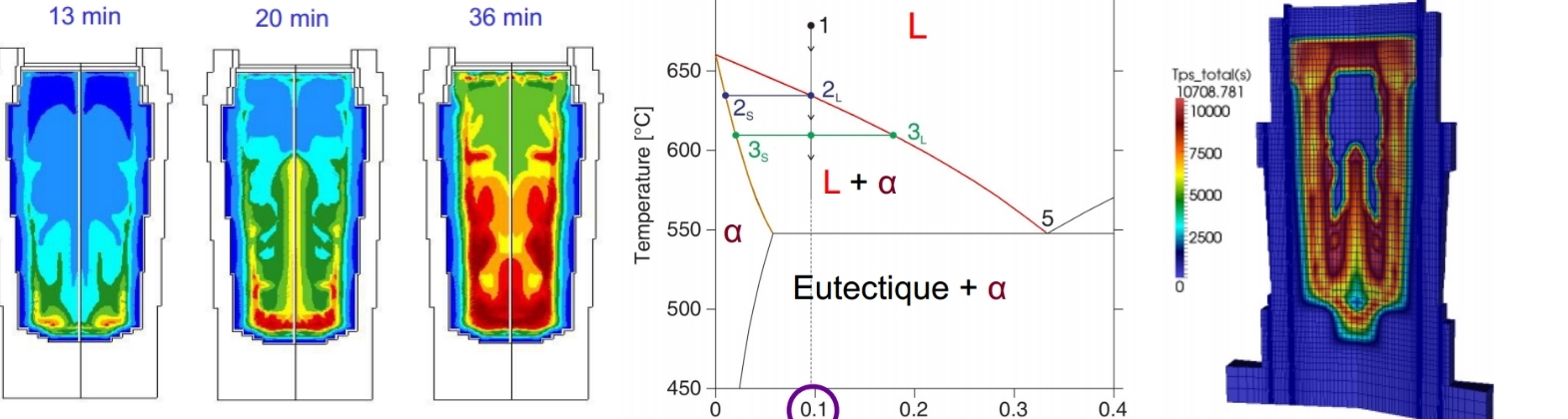
As Solid is a 2D software using axi-symetry model, results are presented according to the simulation domain, used for the reference case.


The following results are then presented that way:

  • Left part of the ingot: are presented the results about the solidification structure
  • right part of the ingot: are presented the results about the segregation

Filling time influence

The Filling Time has a strong impact on the solidification process (on both solidification structures and segregation). Increasing the filling time, makes the columnar thicker. When doing the inverese (reducing the filling time), columnar thickness is reduced.


This is typically the kind of relationship between process, time, temperature and micro-effects that the Solid software can describe.

Mould Temperature

The temperature of the mould during casting can influence the cooling of the ingot.

This is assessed by comparing the reference simulation with one where the cast iron mould is preheated at 250°C (instead of 25°C for the reference).

The results (opposite figure) show that with the preheated mould, the columnar thickness is slightly smaller, as the cooling rate for the columnar was lower. The overall segregation is similar, even if the positive segregation seems more intense at the top of the ingot.

More results

This application has been designed for showcasing the Solid software capabilities and main results. For some more details, you can contact us for downloading the full paper here

Solid: for a digital analysis of ingots casting process

Solid is today a real solution for developping and optimizing your projects. It offers a cost-effective solution for replacing the expansive trials. Solid is available as on premise license (different suited packages are proposed) and consulting services.

Visit our websites for more details about it at
https://www.scconsultants.com

Main targets of numerical simulation

Numerical simulation aims to get closer from the industrial process in order to bring much more accuracy in the results and in comfort in use.

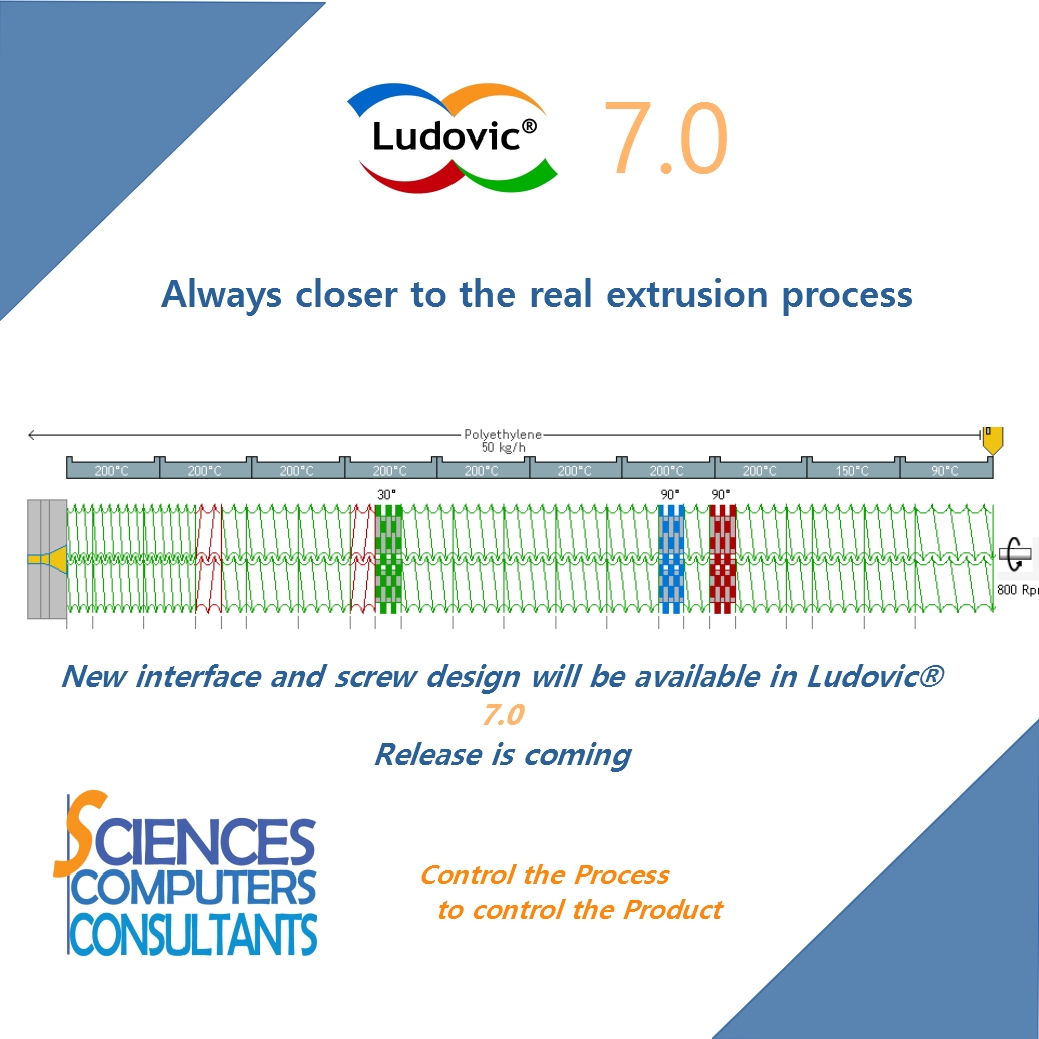
Ludovic v7.0 : always closer to the twin screw extrusion process

Moving closer from the industrial process is a real motivation for our team, as our main target remains to answer the user's needs. As the twin screw process become more and more versatile, more and more technic and more and more focused on the performance : simulation has to do so.

Ludovic V7.0

The new developments of Ludovic V7.0

Lots of developments have been integrated into this newest version of THE software dedicated to corotating twin screw extruders. The Ludovic V7.0 roadmap is mainly driven by all of our users who share their needs or ideas for still improving the model. Thus, the different upgrades are tackling different issues : the user-friendly environment, the extruder design capability and the materials issues.

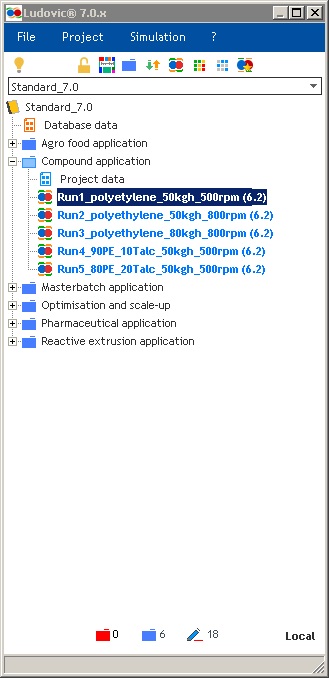
A refreshed interface

The Ludovic environment is a strength of the software. As it allows users to quickly design machines and screw profiles, the interface had to become more intuivite. For reaching this target, different improvements have been designed :

  • Totally refreshed interface
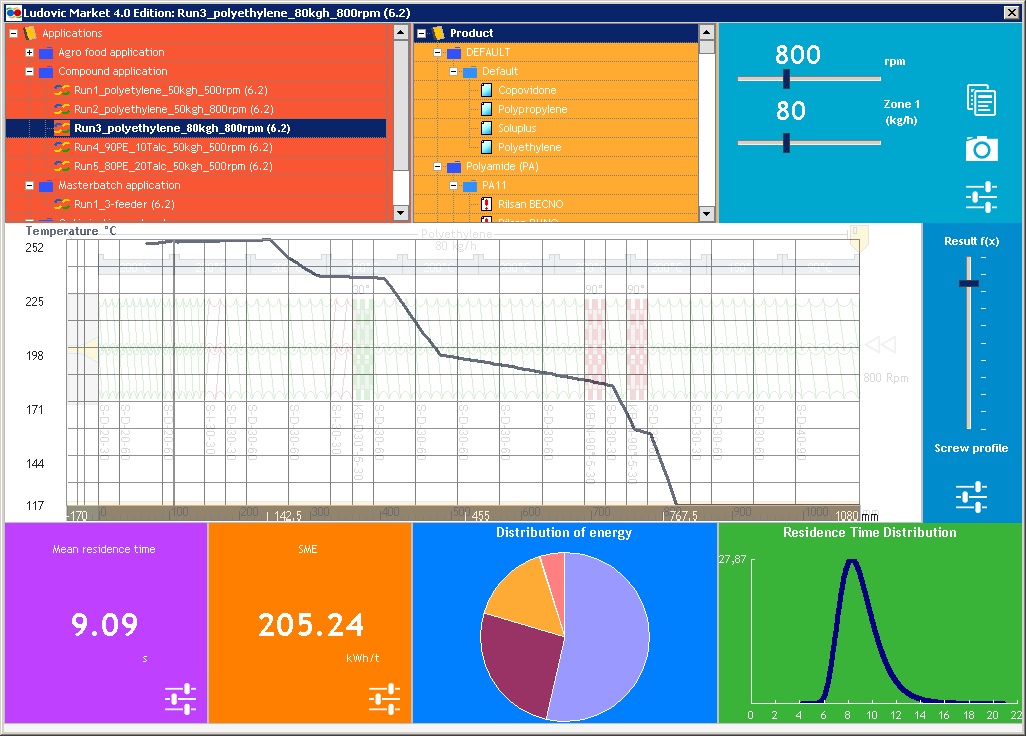
  • New Dashboard for more readability on the simulation key facts
  • Simulation batch mode revisited : for designing a batch of simulations to be afterward computed

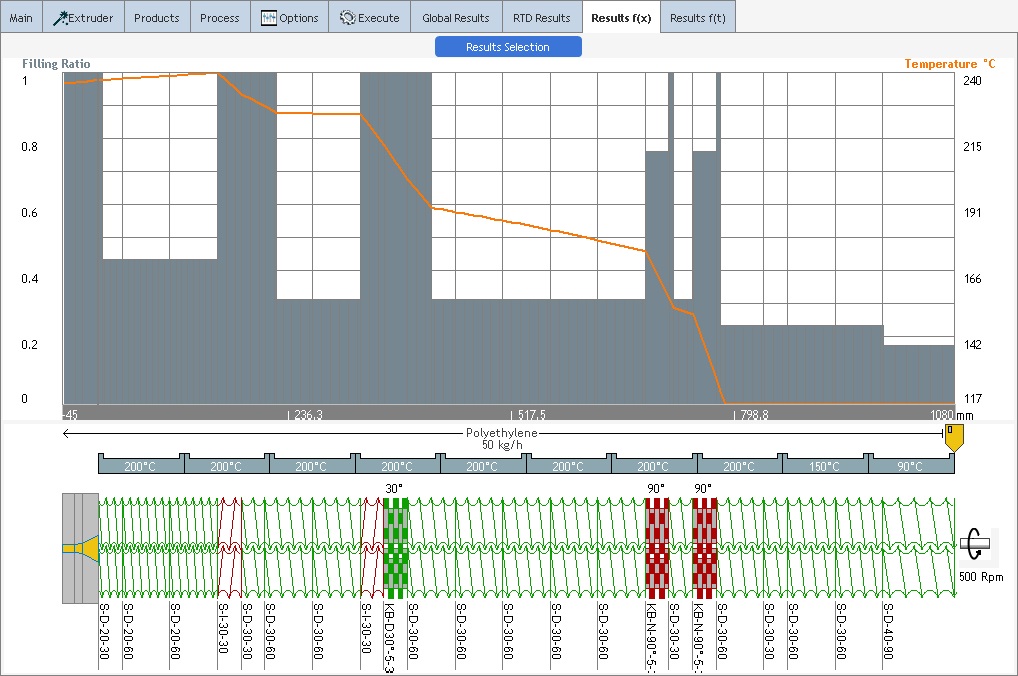
Ludovic new dashboard Ludovic Interface Ludovic New Results

Going further into the process complexity

The user-friendly interface is not the only concern for a modeling software. It has to be complete enough for adressing all the possible issues and configurations handled by the industrials. That is the reason why the model of the software and the features have been pushed again further.

Among the most noticable new integrations :

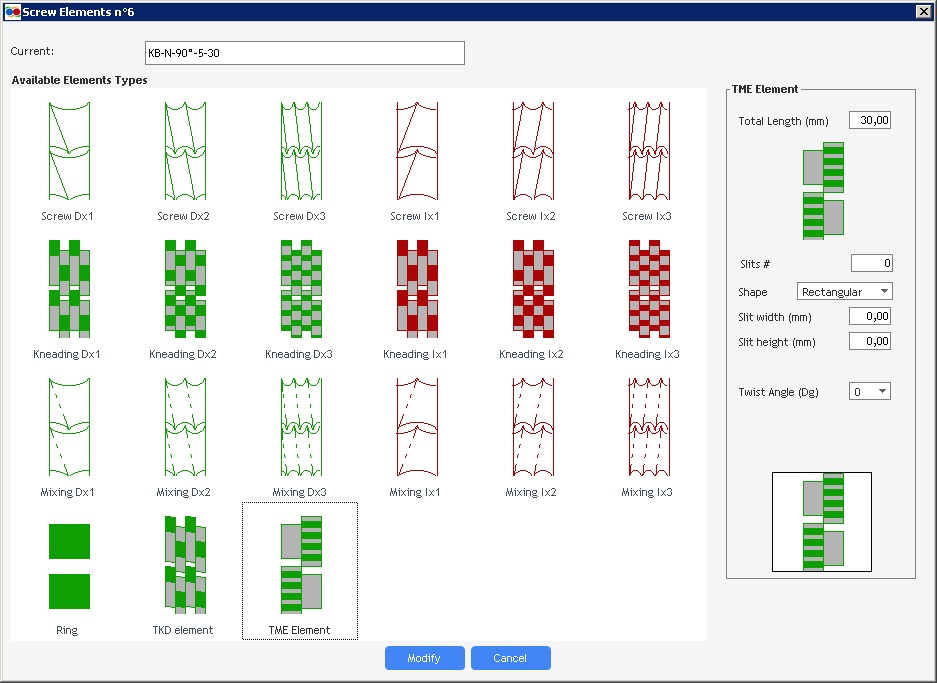
  • Integration of the new Turbine Mixing Elements (TME)
  • Integration of Blister/Ring elements
  • New Standard Database of simulations : integrating realistic configurations (compounds, masterbatches, agro...)
  • Adding the Velocity results at the screw head

screw elements Ludovic main menu

All the new integrated developments are listed on our eSupport site

Soon released

The last tests of this brand new version are now currently performed. Thus, the Ludovic V7.0 should be ready for May, 2020.

All the users being under active maintenance will received the link for downloading the Ludovic V7.0 version.

For any more details, feel free to contact us

Ludovic at the Leistritz Academy

During the Leistriz Pharma extrusion Academy, SC-Consultants presents the Ludovic software, with a special pharma version. The Leistritz Academy takes place in Nurnberg on March 30-31, 2017

Hot Melt Extrusion applications


SC-Consultants introduces new results in Ludovic for meeting the pharma industry specific requirements. With the Pharma Edition, the Ludovic software holds now dedicated results.

Join the Pharma Academy


See the program

Contact

Plus d'articles...